Tuesday, 5 March 2013

Police in the tropical Indian Ocean resort archipelago of the Maldives arrested former president Mohamed Nasheed on Tuesday


Photo Taken : Reuters - Former Maldives President Mohamed Nasheed (C) walks to the Indian High Commission with his supporters and party members in Male February 13, 2013.

March 05, 2013, Pune, India –Police in the tropical Indian Ocean resort archipelago of the Maldives arrested former President Mohamed Nasheed on Tuesday, 10 days after he left the Indian High Commission where he had taken refuge to avoid detention.

A court had ordered police to arrest Nasheed after he missed a February 10 court appearance in a case relating to accusations that he illegally detained a judge during the last days of his rule.

"We have received a court order to arrest him and produce to the court," Maldives police spokesman Hassan Haneef said Reuters. "...We have him in police custody. He will be produced in court tomorrow."

Nasheed, the Maldives' first democratically elected leader, left office last year in contested circumstances. He entered the Indian High Commission, or embassy, on February 13 and left 10 days later on the understanding that he would be able to conduct "peaceful political activity".

His supporters say he was ousted last February in a coup in the Maldives, a major tourist destination. They have clashed with police outside the diplomatic mission.

Soon after Nasheed's arrest, minor scuffles broke out in Male.

Supporters of the detained president threw the brother of the current president, Mohamed Waheed, off his motorcycle and attacked a parked military vehicle.

Some gathered outside the former president's home and blocked nearby roads.
The U.S. embassy in nearby Sri Lanka called for calm in the Maldives and said Nasheed "must be accorded due process under the law regarding his pending court cases".

If Nasheed is found guilty in the case, he could be barred from standing in a presidential election on September 7.

Nasheed's Maldivian Democratic Party denounced his detention as politically motivated, carried out by "numerous armed and masked police officers who did not...produce an arrest warrant or court summons".

The party says any trial is part of efforts to exclude him from the contest and has challenged the court's legitimacy.

A spokesman for President Waheed said no deal had been struck with the Indian government in connection with the former president's decision to leave the high commission.
"There is no deal between us and the judiciary on Nasheed's judgement," said spokesman Imad Masood. "It is totally up to the judiciary. We will have no interference with court."

Nasheed says he was forced from power at gunpoint after opposition protests and a police mutiny. A national commission last August said the toppling of his government was not a coup, but a transfer of power that followed the constitution, a ruling that triggered several days of demonstrations.

The Maldives held its first free elections in 2008. Nasheed defeated Maumoon Abdul Gayoom, who had ruled for 30 years and was accused by opponents and international human rights groups of running the country as a dictator.


 Source :  Reuters ( News Send from Reuters India )


Monday, 4 March 2013

Russian Helicopters to showcase latest Russian developments at Heli Expo 2013


Mi-171A2
Las Vegas / 4 March 2013 – Russian Helicopters, a subsidiary of Oboronprom, part of Russian Technologies State Corporation and a leading global designer and manufacturer of helicopters, will showcase the Ka-62, Mi-171A2and Ka-32A11BC at Heli Expo 2013, taking place in Las Vegas from 5-7 March.

The second day of the exhibition, 6 March, will see the traditional Russian Hour organised and run by Russian participants in the Las Vegas helicopter forum. At this year’s Russian Hour, Russian Helicopters will present the medium multi-role Ka-62, a transport and passenger helicopter being developed using the latest aviation technologies and composite materials in the construction of the fuselage and rotor system.

The Ka-62 meets the highest standards of safety, fuel efficiency and economy of operation. The helicopter’s first flight is scheduled for this year, with certification expected in 2014. The Ka-62 has attracted great interest from potential corporate customers, such as Brazilian company Atlas Taxi Aereo, which has already placed an order for seven of the helicopters.

Another new model on show will be the multi-role Mi-171A2, the latest model in the renowned Mi-8/17 series. The Mi-171A2 combines the recognised qualities and reliability of the Mi-8/17 series – the world’s most popular helicopter, with more than 12,000 manufactured – with innovative new helicopter technologies that substantially expand its range of potential applications.

The Mi-171A2 was developed based on feedback from Mi-8/17 operators and the extensive operating experience of these helicopters around the world – in various climates, at high altitude and at sea.The goal was to make operation of the helicopter even more economical and commercially profitable to preserve Russia’s dominance in the medium helicopter segment.

Also on display will be the Ka-32A11BC, a multi-role coaxial helicopter that can be used for fire-fighting operations, search-and-rescue missions, high-altitude installation work and goods transportation. Canadian company VIH Aviation Group currently operates a fleet of three Ka-32A11BCs.

Heli Expo sets the agenda for the year in the sector, and experts expect it to be a major event, bringing together companies from around the world. More than 20,000 sector specialists are expected to attend, and over 650 exhibition stands.
The Russian Helicopters presentation will get underway at 1pm in hall 110 of the Las Vegas Convention Center.

Ka-32A11BC_04-03

Ka-62

Sunday, 3 March 2013

Promising New Vaccine Delivery System


March 03, 2013, Hyderabad, India – A new vaccine system that require neither refrigeration nor trained practitioners will soon be tested in clinical trials. Sci Dev Net reports :

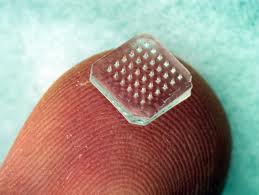
Most vaccines are currently injected using needle and syringe. But unsafe practices including needle and syringe reuse can lead to infections and deaths in developing countries. Nanopatch delivers vaccine through an array of microprojections on a tiny patch placed on the skin, so there would be no pain and fears associated with vaccines delivered by needles.

Since skin is rich in immune cells, the device can trigger an immune response — and hence protection from disease — comparable with that brought about by the needle and syringe method, while requiring only a tiny portion of the dose.
This means that Nanopatch vaccines do not need an adjuvant — a substance that is added to the vaccine to increase the body’s immune response—and are likely to cost much less than conventionally delivered ones.

“When the device is made in sufficiently large numbers, our cost estimates are significantly less than US$1 per dose,” said researcher Mark Kendall of the University of Queensland, Australia.“That opens up possibilities for use in the developing world.”

The patches are small and compact, hence easy to transport, and since they use the vaccine in dried form, they do not need cold-chain refrigeration.

Following successful trials against Chikungunya, West Nile virus and the Human Papillomavirus in mice, Nanopatch is now being tested in real-life settings.
As a precursor to full clinical trials, Kendall carried out usability trials last October at the Port Moresby General Hospital in Papua New Guinea.

“The devices proved to be easy to use by the healthcare workers with minimal training and were successfully applied onto the patients’ arms,” Kendall said SciDevNet.

This means that Nanopatch could go straight to clinical trials, planned for late 2014 to early 2015, he says.

Saturday, 2 March 2013

Magnetic Nanoparticles Embedded in Tough Plastics to Study Degradation of Artificial Joints


March 2, 2013, Hyderabad, India – A Case Western Reserve University chemistry professor has begun imbedding magnetic nanoparticles in the toughest of plastics to understand why more than 40,000 Americans must replace their knee and hip replacements annually.

Anna C. Samia, an assistant professor who specializes in metallic nanostructures, has been awarded a five-year $600,000 National Science Foundation-CAREER grant to create new materials and equipment to test ultra-high molecular weight polyethylene used to make artificial joints. She and her team of researchers will also develop magnetic particle imaging techniques to monitor degradation and wear.

Ultra-high molecular weight polyethylene can be tougher to scratch than carbon steel and as slick as Teflon, which seemingly makes the material an ideal substitute for hardworking joints. There is, however, a weakness: chemical oxidation degrades the plastic.

While that’s known, “Studies that have been done don’t identify the mechanisms in situ,“ Samia said. “We will mimic how the implants age in the body and test how the microstructure of the polymer affects its wear properties while being simultaneously subjected to chemical stress.”

Samia will imbed iron oxide-based magnetic nanoparticles, which are biocompatible, in the polyethylene. Her preliminary research shows that too many nanoparticles weaken the properties of the implant plastic. So, she is tuning the size, composition, and nanoparticle structure and form to develop strongly magnetic polymer composite materials.

This in turn will enable her team to use fewer particles and still get a magnetic signal strong enough to create images that show what’s happening to the plastic. The nanoparticles produce distinctive signals when imbedded and when they are free-floating.

Her team will bathe the polyethylene in biological fluids, hydrogen peroxide and strong acids.They will develop techniques to take images while the imbedded plastic is in the baths.

They will also devise equipment to mimic the mechanical stresses – the push and pull of walking or running – and techniques to take images in this process as well.
The images and analysis will show when nanoparticles and plastic fragments are cut free, and under which conditions, and to track where they migrate.

The ultimate goal is to give manufacturers targets they can hone in on to make the implant material more resistant to the environment inside us, so that implants last a lifetime.

Samia will be working with Case Western Reserve’s Robert W. Brown, Distinguished University Professor in the department of physics, and Mark A. Griswold, director of MRI Research and professor of radiology at the School of Medicine. Their collaborative research team has been recently awarded an Imaging Guided Biomaterials Development pilot grant by the Institute for Advanced Materials (IAM) at the university.

Beyond artificial knees and hips, Samia said the nanoparticles, methods and technologies developed in this study would also be useful for learning how stents, electrodes, artificial organs and other implants degrade inside the body.

“A lot of other materials are used for implants,” she said. “It will be interesting to study them over time.”